
Open this article in your favourite AI assistant


For two decades, outreach and link building had one job: earn links, move rankings, win clicks. That equation is breaking – and the numbers say it is breaking fast.
Google AI Overviews now appear on roughly half of all US searches, with some 2026 trackers putting the figure closer to 60%. When an AI Overview appears, the click-through rate of the top organic result drops sharply: Ahrefs measured a 34.5% decline in early 2025, and its follow-up comparison of 300,000 keywords between December 2023 and December 2025 found the loss had widened to 58%. ChatGPT alone reached roughly 900 million weekly active users by early 2026 and processes over 2.5 billion prompts a day. Gartner projects that traditional search engine volume will fall by 25% as AI assistants absorb query share.
In other words: a growing share of your buyers never see a results page at all. They see an answer – and the only brands present in that interaction are the ones the machine chose to cite.
This is the territory of generative engine optimization (GEO), and outreach sits at the center of it. Not because links stopped mattering – they didn’t – but because the same activity that used to buy you position three on a results page now determines whether an AI system discovers you, trusts you, and quotes you inside the answer itself.
This article walks through the mechanics and the evidence: what GEO is, how generative engines actually select sources, which signals outreach amplifies (with correlation data), and how to redesign an outreach programme – targets, pitch angles, content formats, and measurement – for an environment where the most valuable real estate on the internet is a citation inside a synthesized answer.
What Generative Engine Optimization Actually Is
Generative engine optimization is the practice of structuring and positioning content so that AI-driven search experiences – Google AI Overviews, ChatGPT, Perplexity, Gemini – can accurately analyze it and select it as a source for their responses.
The term isn’t marketing jargon. It was formalized in a peer-reviewed paper, “GEO: Generative Engine Optimization” (Aggarwal et al.), produced by researchers from Princeton University, Georgia Tech, the Allen Institute for AI, and IIT Delhi and presented at ACM KDD 2024. The study built GEO-bench, a benchmark of 10,000 queries across nine domains, and tested which content modifications actually change what generative engines cite. The headline result: targeted GEO techniques boosted content visibility in AI responses by up to 40% on the researchers’ test rig and by up to 37% when validated on Perplexity.ai, a live commercial engine.
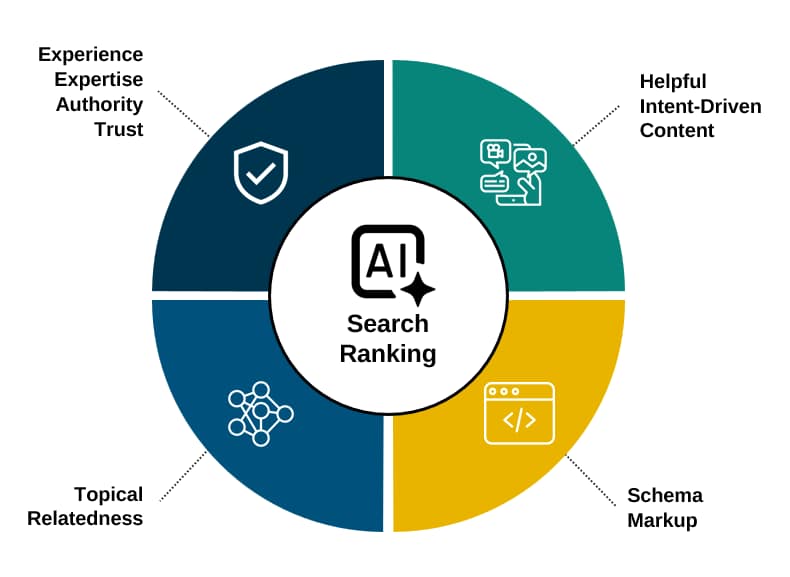
The distinction from traditional SEO is subtle but consequential. Classic SEO optimizes for ranking: you want to appear as high as possible in a list because position drives click probability. GEO optimizes for citation: you want to be one of the handful of sources an AI system reads, trusts, and quotes when composing an answer.
SEO is a fight for blue-link visibility. GEO is a fight for answer-level visibility. In the first game, the user sees ten options and picks one. In the second, the machine has already chosen – and if you’re not among its sources, you don’t exist in that interaction at all.
The two disciplines are not rivals. GEO layers on top of classic SEO rather than replacing it: technical health, domain authority, and demonstrable E-E-A-T remain the entry ticket. What changes is what you build on that foundation – and outreach is the primary construction tool.
How Generative Engines Choose Their Sources
To see why outreach matters so much for GEO, look at the selection process from the machine’s side.
When a user asks a generative engine a question, the system typically interprets the conversational query, often decomposing it into sub-queries; retrieves candidate pages, usually via an underlying search index; evaluates them for authority, relevance, and extractability; and synthesizes a narrative answer that quotes and links to the sources it judged most reliable and easiest to lift accurate passages from. We’ve unpacked this parsing–retrieval–synthesis pipeline, engine by engine, in our guide to how different AI models read the web.
Three data points about this process deserve attention.
First, generative engines inherit classic ranking signals – but the dependency is weakening
Google has stated that AI Overviews build on existing Search systems, and in mid-2025 that showed clearly: around 76% of AI Overview citations came from pages ranking in Google’s organic top 10. By early 2026, that overlap had collapsed to 38% in Ahrefs’ data, and BrightEdge measured it as low as 17% on some query sets. Translation: strong classic SEO still gets you into the candidate pool, but it no longer guarantees a citation – engines increasingly pull from a much wider set of sources, selected on trust and extractability rather than rank alone.
Second, engines measurably prefer specific content properties
The Princeton/KDD 2024 study isolated the techniques that moved citation visibility most. The three strongest were adding relevant statistics, incorporating credible expert quotations, and citing reliable sources within the content – each driving visibility improvements in the 30–40% range on the study’s position-adjusted metrics. Even purely stylistic changes – improving fluency and readability – produced a 15–30% lift. Keyword stuffing, notably, performed among the worst of all tested tactics.
Third, the platforms diverge sharply
A 2026 analysis of 680 million citations found that only 11% of domains are cited by both ChatGPT and Perplexity, and Google’s AI Overviews and AI Mode cite the same URLs just 13.7% of the time. There is no single “AI search” to optimize for – there is a portfolio of engines with distinct source preferences, which is precisely why distribution breadth (the thing outreach produces) matters so much.
The practical takeaway: source selection is a two-stage filter. Authority signals get you into the candidate pool; extractive clarity gets you quoted. Outreach influences both stages – and that is the core of its role in GEO.
The Number That Reframes Link Building: 0.664 vs 0.218
If one statistic justifies rethinking outreach for the AI era, it’s this one.
In 2025, Ahrefs analyzed 75,000 brands to identify which signals best predict a brand’s inclusion in Google’s AI Overviews. The results, in order of correlation strength:
- Branded web mentions: 0.664 – the single strongest factor measured
- Branded anchor text: 0.527
- Branded search volume: 0.392
- Backlinks: 0.218
Read that carefully. Brand mentions predicted AI visibility roughly three times more strongly than backlinks. The top three factors were all brand-related, not link-related. And in Ahrefs’ December 2025 follow-up, which extended the analysis to ChatGPT and Google AI Mode, YouTube mentions correlated with AI brand visibility at roughly 0.737 – outperforming every other signal tested.
The mechanism is intuitive once you consider how these systems work. A retrieval-augmented engine grounds its answer in indexed pages, then runs a language model over them. If the model consistently encounters your brand name in credible contexts across the corpus it reads, your brand becomes statistically associated with your topic – and far more likely to surface in the output. A backlink tells a crawler where to navigate; a mention tells a language model what to trust.
Two supporting findings sharpen the picture:
- Muck Rack tracked over 1 million AI prompts across major platforms and found that roughly 85% of AI citations come from earned media – news coverage, feature articles, and independent editorial – rather than brands’ own domains.
- Review presence has a threshold effect. A 2026 analysis of 177 brands across healthcare, SaaS, and financial services found that brands with no Trustpilot profile had a median AI citation rate of 1%, while brands with even a minimal profile of 1–13 reviews jumped to 53.5%.
The implication for outreach is not “stop building links” – backlinks still correlate positively, and they still power the classic rankings that feed engine retrieval. The implication is that the unit of value has shifted. Every placement should now be evaluated on two axes: the link equity it passes and the brand mention it plants in the corpus AI engines read. Outreach is the only discipline that systematically produces both.
Authority and E-E-A-T: The Trust Layer Outreach Builds
E-E-A-T – experience, expertise, authoritativeness, trustworthiness – began as a framework in Google’s quality rater guidelines. In the generative era, it has acquired a second life, because AI systems face the same problem human raters do: with millions of pages making competing claims, whose version of reality do you repeat?
The engines answer that question largely by looking at where a source appears across the wider web. And every successful outreach placement contributes to that profile:
- High-quality backlinks remain a foundational signal inherited from the classic search systems generative engines are built on.
- Brand mentions – even unlinked – are, per the Ahrefs data above, the strongest single predictor of AI Overview inclusion measured to date.
- Expert quotes in third-party articles attach named human expertise to your brand entity. The Princeton study found quotation addition to be one of the three most effective visibility techniques, boosting citation visibility by up to 40%.
- Placements in reputable publications matter disproportionately because engines lean on earned media: with ~85% of AI citations coming from independent editorial sources (Muck Rack), the publication’s credibility is the vehicle your expertise travels in.
Here is the reframe that matters for anyone running campaigns: in a GEO context, each successful placement is not just “a link.” It is a new authoritative node on the web that can itself be cited in generative answers. When an AI Overview cites the industry publication that quoted you, your expertise rides inside that citation. Your footprint compounds in ways referring-domains count never captures.
Entity Footprint: Becoming a Node in the Knowledge Graph
There is a deeper structural shift in how search systems model the world, and outreach is perfectly positioned to exploit it.
Modern engines increasingly construct and consult knowledge graphs: structured maps of entities – people, brands, products, topics – and the relationships between them. When a generative engine synthesizes an answer about, say, technical SEO audits, it is not merely matching keywords. It consults its model of which entities are central to that topic and which of them the wider web treats as reliable.
Your goal in this model is entity centrality: becoming a well-connected, frequently referenced node in the graph for your niche.
Outreach builds entity centrality in a way on-site optimization cannot. Publishing brilliant content on your own domain creates one node with one voice. Outreach that gets your brand and key people mentioned and linked across diverse, context-rich environments – industry blogs, review platforms, news sites, and professional communities – creates dozens of independent confirmations that your entity belongs at the center of its topic.
Diversity is the operative word, and the platform-divergence data explains why. If only 11% of domains are cited by both ChatGPT and Perplexity, then concentrating your entire footprint on one publication type means being visible to one engine and invisible to the rest. Ten mentions across ten source types – a trade publication, a SaaS directory, a podcast transcript, a conference recap, a community thread, a review platform – build a richer entity profile than thirty links from near-identical guest-post blogs, because each context type feeds a different engine’s retrieval preferences.
The payoff is direct: entity centrality raises the probability that when any generative engine assembles an answer in your niche, your site is selected as a reliable anchor. You stop being one of ten thousand pages about a topic and become one of the handful of entities the machine reaches for by default.
Citation-Worthy Placements, Not Just Links
Here is where GEO forces a genuine change in outreach craft – not just where you place content, but what that content looks like.
The evidence on format preference is unusually consistent:
- The Princeton/KDD 2024 experiments showed that content carrying explicit statistics, expert quotations, and source citations gains 30–40% more visibility in AI answers than the same content without them.
- Wix’s March 2026 analysis of citations across AI Mode, ChatGPT, and Perplexity found listicles are the single most-cited content type (21.9% of citations), ahead of standard articles (16.7%) – and for commercial queries, listicles account for 40.86% of all citations.
- Freshness is a measurable signal: AirOps found that 95% of ChatGPT citations come from content updated within the past 10 months, and pages with visible “last updated” timestamps earn roughly 1.8x more citations.
- Structured data helps machines parse you: analyses cited by Exposure Ninja put the citation improvement from proper schema markup at around 30%.
The reason is mechanical. A language model composing an answer needs passages it can lift cleanly: a definition it can quote, a statistic it can attribute, and a step list it can reproduce. Ambiguous prose is expensive to extract from; structured content is nearly free.
This changes what a “good placement” means. In classic link building, the placement was a vehicle for the link – the surrounding content was almost incidental. In GEO-oriented outreach, the content of the placement is the asset. Prioritize opportunities where you can contribute:
- Definitive definitions – “what is X” passages clean enough to be quoted verbatim;
- Step-by-step methodologies — numbered processes an engine can reproduce as an answer skeleton;
- Comparison tables and listicles – the formats with the highest measured citation rates, mapping directly onto “best X” and “X vs Y” queries;
- Original statistics and benchmarks – the single strongest citation technique in the Princeton data;
- FAQ contributions — question-framed headings that mirror how users actually phrase AI queries.
The pitch changes accordingly. Instead of “Would you link to our resource,” the GEO-era pitch is “Use our definitive definition, our methodology, and our benchmark data – material your readers can rely on and AI engines will quote.” That is also a stronger pitch for the editor: you are offering reference material, not asking for a favor.
Multi-Platform Visibility: Where the Citations Actually Live
GEO is inherently multi-platform, and the citation-share data shows how lopsided the landscape is compared with a blogs-only outreach plan.
A June 2025 Semrush study analyzing more than 150,000 AI citations across 5,000 keywords found that 40.1% of LLM references pointed to Reddit — ahead of Wikipedia (26.3%) and YouTube (23.5%). In Google AI Overviews, Reddit alone accounts for roughly 21% of citations; on Perplexity, Reddit’s share climbs as high as 46.7% in some query categories. Community-generated and video content, in other words, dominates the source mix for exactly the exploratory and comparison queries where buying decisions form.
A GEO-aware outreach program deliberately covers these surfaces:
- Community participation – Reddit, niche forums, professional groups – places your expertise in the conversational, question-and-answer contexts engines demonstrably favor for commercial queries. Tinuiti’s Q1 2026 AI Citations report found Reddit’s citation share grew at least 73% across commercial categories between October 2025 and January 2026.
- Video and podcast presence matters because YouTube mentions were the strongest correlate of AI brand visibility (≈0.737) in Ahrefs’ December 2025 analysis, and podcast appearances generate transcripts – long-form, expertise-dense text that retrieval systems consume directly.
- Review platforms and directories carry that dramatic threshold effect: from a 1% median citation rate with no review profile to 53.5% with even a handful of reviews.
- Earned editorial remains the trust backbone, supplying ~85% of AI citations per Muck Rack.
One caution the data also supports: citation patterns are volatile. Semrush documented ChatGPT’s Reddit citation share collapsing from roughly 60% of responses to about 10% within weeks in late 2025 after an upstream change, before recovering. Platform mix should be treated as a portfolio to rebalance, not a one-time bet.
Traditional SEO Outreach vs GEO Outreach: What Actually Changes
The fundamentals – editorial relationships, quality standards, relevance – carry over. The objective, metrics, targets, and content all tilt.
| Dimension | Traditional SEO outreach | GEO-oriented outreach |
|---|---|---|
| Core objective | Acquire backlinks to improve rankings | Acquire citation-worthy mentions to appear inside AI answers |
| Primary metric | Domain/URL authority, keyword rankings, referral traffic | AI citation count and quality; brand mentions inside generated answers (mentions correlate at 0.664 with AI visibility vs 0.218 for backlinks – Ahrefs) |
| Ideal placement | Any high-DR site in your niche | High-authority sites whose pages already trigger AI Overviews or are frequently cited by AI tools |
| Content format | Guest posts, resource links, general thought leadership | Structured explainers, listicles (21.9% of AI citations – Wix), FAQs, comparison tables, data summaries optimized for extraction |
| Pitch angle | “Link to our resource / include us in your list” | “Use our definitive definition, methodology, or benchmark data your readers and AI engines can quote” |
| Surface mix | Blogs and online publications | Editorial + communities, video, podcasts, review platforms and directories |
Notice what the table implies about placement selection. In the classic model, a high-DR domain in your niche was a good target more or less by definition. In the GEO model the sharper question is: does this publication already get cited by generative engines? With top-10 rankings now supplying only 17–38% of AI Overview citations, DR alone is a weak proxy. A site that consistently appears as a source in AI answers is worth disproportionately more than an equally authoritative site the engines ignore – because engines reuse and reinforce sources they already trust. Getting placed on an already-cited page is the closest thing GEO has to a shortcut.
A Practical Playbook: Adapting Your Outreach for GEO
What does a GEO-aware campaign actually do differently on Monday morning?
1. Map the citation landscape before you prospect
Run your priority queries through Perplexity, ChatGPT, and Google (watching for AI Overviews) and log which domains are cited for each. This citation map replaces – or at least reweights – the DR-sorted prospect list. Publications that already appear as sources are tier-one targets. And because only ~11% of domains are cited by both ChatGPT and Perplexity, map each engine separately: your ChatGPT target list and your Perplexity target list will mostly not overlap.
2. Prioritize citation-rich keywords
Identify the queries in your space where AI answers appear most often – informational queries trigger them heavily, and commercial-query coverage in AI Overviews roughly doubled (from 8% to 18%) through late 2025. Placements relevant to those queries are high-value targets; a modest placement feeding a high-volume AI Overview can outperform a prestigious placement on a page the engines never consult.
3. Negotiate format, not just inclusion
When you pitch, negotiate for structural elements: H2s/H3s framed as questions, explicit statistics with sources, definition blocks, comparison tables, list formats. These are exactly the elements the Princeton experiments showed drive 30–40% visibility gains – and the difference between a placement that earns a citation and one that earns only a link.
4. Lead with proprietary data
Statistics addition was the single most effective technique in the KDD 2024 study, and original data is the one asset competitors cannot replicate. Build campaigns around a survey, an operational dataset, a named methodology, or benchmark – then place them, with clear attribution requirements, on the publications your citation map identified. Refresh it: with 95% of ChatGPT citations going to content updated within 10 months, an annually updated benchmark compounds, while a one-off report decays.
5. Extend beyond blogs deliberately
Allocate real outreach effort to communities, videos/podcasts, and review platforms – the surfaces that collectively dominate AI citation share (Reddit alone at ~40% of LLM references in Semrush’s data). For a brand with zero review-platform presence, fixing that may be the single highest-leverage GEO action available, given the 1% → 53.5% citation-rate threshold effect.
6. Keep the classic fundamentals intact
None of the above works on a weak foundation. Technical health, clean architecture, and a genuine backlink profile remain prerequisites, because engines still ground retrieval in classical search systems. GEO-oriented outreach is an evolution of good SEO outreach, not an escape from it.
Measurement: Closing the Loop on AI Citations
The final adjustment GEO demands is in measurement – and the business case for measuring is strong. Pages cited in AI Overviews earn 35% more organic clicks and 91% more paid clicks than non-cited competitors on the same results page (Seer Interactive). And AI-referred visitors convert dramatically better: analyses put AI search traffic conversion around 14.2%, versus roughly 2–3% for classic Google organic. The volume is smaller; the value per visitor is multiples higher.
Classic outreach reporting – referring domains, authority scores, and referral traffic – stays. GEO adds a new core question: how often do AI engines cite or mention your brand? Answering it currently takes a blend of emerging monitoring tools and disciplined manual checking.
The recommended practice: define a panel of key queries for your business. On a regular cadence, run them through Perplexity, ChatGPT, and Google AI Overviews. Log every instance where your site – or a placement you earned – appears as a cited source or named mention, and track where competitors appear and you don’t.
Over time this log becomes a genuine analytics asset. You can correlate campaigns, content formats, and publication targets with movements in AI citation frequency: did the benchmark study placed in that trade publication start surfacing in Perplexity answers? Did restructuring a partner page into an FAQ earn it an AI Overview slot? Given documented volatility – citation shares shifting by multiples within weeks – cadence matters; quarterly snapshots will miss the swings.
Treat “mentions in generative answers” as a first-class KPI alongside rankings and referral traffic. On queries where AI answers appear – now roughly half of all searches – it is arguably the senior metric, because it measures presence at the layer where user attention actually lives.
What This Means for Link Building as a Discipline
Step back and the through-line is clear. For a link-building and outreach studio – and any brand running outreach in-house – GEO is a reframing, not a replacement. The craft survives: prospecting, relationships, editorial quality, and relevance. What changes is the definition of success. The unit of value shifts from “a link that moves rankings” to “a citation-worthy presence that generative engines select, quote, and attribute.”
Call it citation building. It still earns links – the engines still count them. But it also earns what links alone never guaranteed: a seat inside the answer. This is exactly the logic behind our generative engine optimisation service: outreach, content, and structure designed to earn citations, not just links.
The data suggests early movers gain a compounding advantage. Engines reinforce sources they trust; 92% of marketers say they plan to optimize for AI search, but only around 40% are actually doing it. Every citation makes the next more likely; every authoritative node added to your entity footprint makes your brand a slightly more obvious anchor for the next synthesized answer. Outreach was always about building authority across the web. GEO raises the stakes on doing it well – because now the machines are reading, and they are deciding, query by query, whose expertise the world gets to see.
Frequently Asked Questions
Does GEO replace traditional SEO and link building?
No. GEO layers on top of classic SEO. Generative engines still ground retrieval in traditional search systems, so backlinks, technical health, and topical authority remain the first filter. But the dependency is loosening fast: the share of AI Overview citations coming from top-10 organic results fell from about 76% in mid-2025 to 17-38% by early 2026 (BrightEdge / Ahrefs). Classic SEO gets you considered; GEO gets you cited.
What’s the difference between a backlink and an AI citation?
A backlink is a hyperlink valued for the authority it passes and the rankings it supports. An AI citation is an instance where a generative engine quotes, references, or links your content inside a synthesized answer. Per Ahrefs’ 75,000-brand study, brand mentions predict AI visibility about three times more strongly than backlinks (correlation 0.664 vs 0.218) – so modern outreach should be evaluated on both axes at once.
Which placements matter most for GEO?
High-authority publications whose pages already trigger AI Overviews or are frequently cited by AI tools – plus the surfaces that dominate citation share: community platforms (Reddit alone drew ~40% of LLM references in Semrush’s 150,000-citation study), YouTube, and review platforms, where even a minimal profile lifts median citation rates from 1% to over 53%.
How do I know if AI engines are citing my brand?
Through a blend of emerging AI-visibility tools and disciplined manual checks: run your key queries through Perplexity, ChatGPT, and Google AI Overviews on a regular cadence and log every appearance of your brand or earned placements as cited sources. Check each platform separately – only ~11% of domains are cited by both ChatGPT and Perplexity.
How quickly does GEO-oriented outreach show results?
Individual placements can surface quickly if they land on pages the engines already consult – Perplexity can index and cite fresh content within hours. But entity centrality is built through sustained, diverse placement over months, and it compounds: engines reinforce sources they have already trusted. Freshness maintenance matters too – 95% of ChatGPT citations go to content updated within the past 10 months (AirOps).